Parent Editor & Content Lead
PARENT EDITOR & CONTENT LEAD
What dysgraphia and dyscalculia are, the signs by age, why online tests only screen, who assesses in Cyprus, how school support and exam arrangements work, and how to choose a special educator.
Updated
13 min read
LAST REVIEWED:
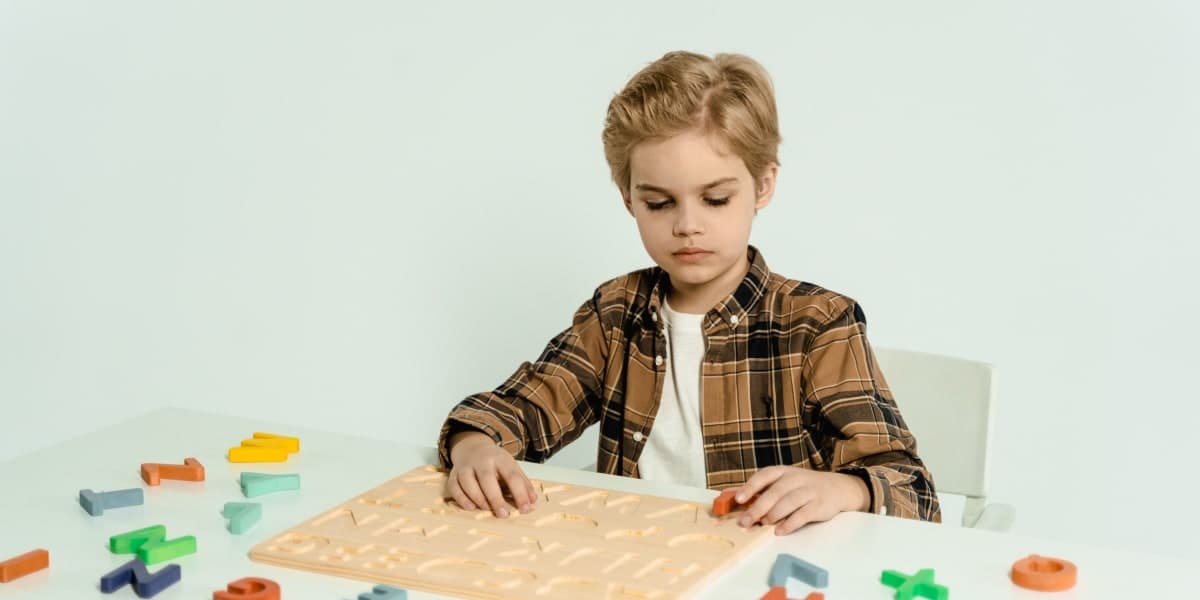
A calm 2026 guide for parents in Cyprus on dysgraphia, dyscalculia and other learning difficulties: signs, tests, assessment, school support and exam arrangements.
Many parents start searching when homework becomes a daily struggle: spelling that stays wrong after hours of practice, ideas that never make it onto paper, or counting on fingers long after classmates have stopped. Sometimes a teacher calls it laziness.
Specific learning difficulties are not laziness and not a sign of low intelligence. They are persistent difficulties with reading, writing or maths that continue despite good teaching, so more effort alone does not fix them. Dyslexia is the best known; this guide covers the others, mainly dysgraphia (in Greek, dysgrafia) and dyscalculia (in Greek, dysarithmisia).
Most Greek-language advice online describes Greece, where schools, services and health insurance work differently. Everything below is about Cyprus in the 2026-27 school year.
Our editors researched this guide independently, from official and published sources checked on 5 November 2026. It is not written by a clinician and it does not diagnose. If you already know your child needs help, start with the learning difficulties support and special educators pages in our SEN directory; our dyslexia guide covers reading difficulties.
The World Health Organization's classification (ICD-11) calls them developmental learning disorders: a significant and persistent difficulty learning to read, write or calculate, well below what is expected for the child's age and general ability. It shows up when these skills are taught in the early school years and causes real problems at school (WHO ICD-11, developmental learning disorder).
The difficulty must not be explained by something else, such as an intellectual disability, a vision or hearing problem, a neurological or motor condition, missed schooling, not knowing the language of instruction, or hard circumstances at home. The language point matters in Cyprus, where many children learn in their second or third language.
| Term | In Greek | Main area of difficulty |
|---|---|---|
| Dyslexia | dyslexia | Reading |
| Dysgraphia | dysgrafia | Writing: forming letters legibly and fluently by hand or on a keyboard, and in many definitions also spelling, grammar, punctuation and organising ideas |
| Dyscalculia | dysarithmisia | Maths: number sense, remembering number facts, accurate and fluent calculation, mathematical reasoning |
The American Psychiatric Association's manual (DSM-5) treats them as one diagnosis, specific learning disorder, with specifiers for reading, written expression and maths. The difficulties must last at least six months despite targeted help (American Psychiatric Association). A child can have more than one, and they often occur together with ADHD, developmental coordination disorder, developmental language disorder or autism.
In Cyprus law the term is specific learning difficulty (in Greek, eidiki mathisiaki dyskolia), while psychologists speak of specific learning disorders. Learning difficulties (in Greek, mathisiakes dyskolies) on its own is a general description, not a diagnosis.
These difficulties show once a skill is taught, so most are noticed in primary school. Below are examples of what professionals look at; one example on its own means little.
| Stage | Writing | Maths |
|---|---|---|
| Before school | Fine-motor difficulties, such as holding a pencil, can be an early sign | Too early to tell: the difficulty shows once maths is taught |
| Early primary | Spelling stays inaccurate even after practice | A weak sense of numbers and quantities; simple number facts are not remembered |
| Later primary | Grammar and punctuation errors; finds it hard to put thoughts on paper | Calculation stays slow or inaccurate; word problems are hard |
| Secondary | Written work is poorly organised and hard to follow, even when the child knows the topic | Mathematical reasoning and multi-step problems remain hard |
What matters is persistence. Learning a skill later than classmates does not by itself mean a disorder. A learning disorder is a difficulty that continues despite adequate teaching and stays well below what is expected for the child's age (WHO ICD-11, developmental learning disorder).
In 2026-27, the Educational Psychology Service asks public schools to give first-year primary pupils (A' Dimotikou) with only learning difficulties, and pupils with a migrant background still in Greek-language lessons, reasonable time and teaching before an assessment (Ministry circular of 31 August 2026).
Slow reading or poor spelling in a language your child does not speak at home is not, on its own, a learning disorder. From 2026-27, public secondary schools can give pupils with a migrant background reading support, an exemption from spelling marks and extra time without any assessment (Ministry circular on pupils with a migrant background).
Many parents ask whether their child has dysgraphia or just bad handwriting (in Greek, kakografia). The word is not used the same way everywhere. The American Academy of Pediatrics describes dysgraphia as difficulty with the physical act of writing, by hand or on a keyboard, and treats difficulty expressing ideas in writing as a separate disorder of written expression (American Academy of Pediatrics). The WHO's written-expression difficulty covers spelling, grammar and punctuation, and organising ideas in writing (WHO ICD-11, developmental learning disorder), and many professionals use dysgraphia for both.
So handwriting itself can be the main difficulty: writing that stays slow, effortful or hard to read for your child's age despite practice. Messy writing on its own is common and is not a diagnosis. When writing is one of several movement difficulties, such as clumsiness, or dressing and sport that lag behind their age, it can be a sign of developmental coordination disorder, also called dyspraxia (NHS page on dyspraxia). If handwriting, pencil grip or other fine-motor tasks are the main worry, our occupational therapy guide explains the next steps.
Many children have difficulties of both kinds, so a good assessment looks at how your child writes (speed, legibility, effort and pencil grip) and at what they write (spelling, sentences and the order of ideas).
Illegible handwriting need not cost marks: in public secondary schools, the District Committee for Special Education can allow a computer, or a teacher who copies the answers legibly after the exam (see section 6).
Searching for a dysgraphia or dyscalculia test mostly brings up online quizzes. A quiz can at most suggest whether an assessment is worth booking; it cannot diagnose.
Even in a clinic, one test score is not enough to tell a disorder from normal variation (WHO ICD-11, developmental learning disorder). A diagnosis comes from a full evaluation: standardised tests, your child's history, school reports and observation (American Psychiatric Association).
Psychologists are regulated in Cyprus. Only registered psychologists may use the title or practise, and they must work within their recognised specialty, one of which is school and educational psychology. Registration requires, among other things, a postgraduate qualification in the specialty and 1,000 hours of practice (Law 68(I)/1995).
To check a psychologist, look them up in the register of psychologists published online by the Cyprus Psychologists Registration Board, which shows each person's specialty. The list has no search filter, so use your browser's find function. For a learning difficulty, choose a registered psychologist, ideally one with the school and educational specialty; our directory lists educational psychology providers.
Three kinds of assessment count in Cyprus: a psycho-educational assessment by the Ministry of Education's Educational Psychology Service, a report from a registered psychologist, and the multidisciplinary assessment of the District Committee for Special Education. For a specific learning difficulty, the Committee's team must include at least one educational psychologist (Law 113(I)/1999).
For a private assessment, ask for a written report naming the tools used, the method, the findings and the recommendations. You can send it with a referral to the District Committee, but the Committee makes its own decision.
In public schools, support usually follows three steps, in this order:
By Ministry rule, the school's intervention comes before a school referral (Ministry circular on school intervention). In 2026-27, a referral from a public school to the Educational Psychology Service needs the agreement of the school's educational psychologist and both parents' signatures where both have parental rights, and referrals for learning support or assessment must reach the Service by the end of April (Ministry circular of 31 August 2026).
The Service may see children in order of urgency, and its reports are not shared with anyone else without your consent.
Parents can also apply directly to the Educational Psychology Service office of their district, with the Service's referral form. If your child is at a private school, ask your district office whether it can see your child: we could not confirm this from official sources.
Under the special education law, a child with a specific learning difficulty has special needs only if they need special education (Law 113(I)/1999). So dyslexia, dysgraphia or dyscalculia counts as a special need once the District Committee assesses your child and decides that special education, accommodations or exemptions are needed. A diagnosis alone does not do it.
Anyone, especially parents, can notify the Committee, and it must assess a child wherever they go to school, private schools included. In 2026 the Ministry accepts new requests either with the referral form and a report by at least one specialist, such as an educational psychologist, or through the school's intervention step (Ministry circular of 15 January 2026, Annex A). The form, in Greek and English, is on the Ministry's special education forms page, and our SEN assessment guide explains the Committee's steps and appeals.
In public primary schools, special education teachers work with the pupils the Committee has approved. In 2026-27 they draw up an individual education plan within 30 days of the multidisciplinary meeting and agree its goals with parents, who are entitled to a copy (Ministry circular of 19 October 2026).
In public secondary schools, a pupil with a specific learning difficulty joins the support-and-exemptions programme by District Committee decision: support lessons in core examined subjects at their own school, in exchange for exemption from some subjects that are not examined. There is no exemption from examined subjects (Ministry circular of 15 January 2026, Annex B).
In gymnasium, group support covers Modern Greek and maths (plus physics and biology in later years), with exemptions from Ancient Greek and French. In the second and third years of lyceum, support is only in Modern Greek and common-core maths. If parents refuse the support lessons, the exemptions end.
The District Committee approves accommodations, and the Ministry's January 2026 circular lists them by code (Annex D). The main ones for learning difficulties:
| Accommodation | What it means |
|---|---|
| Extra time | 20% more, or more by Committee decision on specialist advice; no questions are removed |
| Reading aloud | The paper is read aloud and its wording simplified; in exams, in a separate room, with up to 10 minutes added |
| Spelling exemption | Spelling and punctuation are not marked, with a mark adjustment, in Modern Greek, Ancient Greek and foreign languages |
| Scribe | The pupil dictates the answers, with 10% more time; includes the spelling exemption |
| Copier | A teacher copies the pupil's answers legibly after the exam |
| Computer | No internet, with spelling and grammar checks switched off |
| Other | Short breaks, or exemption from listening tasks in foreign languages or from part of a paper |
Accommodations apply in every subject, examined or not. Parents who do not want them must give the school a signed letter before lessons end.
New District Committee requests are accepted from age 3 until the end of the first term of the second year of lyceum (B' Lykeiou) or technical school, or of the sixth year at seven-year private schools. Later requests are not examined, apart from unforeseen cases such as a recent serious illness, abuse or bereavement (Ministry circular of 15 January 2026, Annex A).
In 2026-27 the first term of lyceum ends on Friday 15 January 2027 (secondary school year circular). So if your child is in the second year of lyceum now and may need Pancyprian accommodations, the request should be in by then; the Educational Psychology Service sets the same cut-off for school referrals (Ministry circular of 31 August 2026).
Candidates with special needs, including a specific learning difficulty, apply for accommodations with their exam application, and a Special Committee for Accommodations decides. Accommodations must make up for the difficulty without giving an advantage (Law 14(I)/2017, articles 10 and 11).
In 2026, the committee gave extra time to candidates who asked for it only where the District Committee for Special Education had already granted it, plus 5 candidates with serious health problems (Ministry announcement of 23 June 2026). A private report alone was not enough.
In 2026, applications, with any accommodation request, ran online from 2 to 14 March (2026 exam guide). The 2027 dates had not been published on 5 November 2026: check the Ministry's Pancyprian Examinations guide page.
For international exams, access arrangements follow each exam board's own rules, and the school applies as the exam centre. Our dyslexia guide explains how exam access arrangements work.
The District Committee assesses and reassesses private-school pupils too, and its recommendations apply to private schools by analogy. Each private school must tell parents, before enrolment, its special education policy: which provisions and accommodations it can offer, and any costs to parents (Ministry circular of 15 January 2026, Annex A).
Under the Private Schools Law, a school's internal regulations must cover special education, school escorts, accommodations and any educational psychology service of its own, and the school provides the equipment the Committee's assessment says a child needs (Private Schools Law, articles 13 and 14).
Who pays for extra support at a private school is a separate question, and it is not settled. Our autism guide's section on private schools explains the Ombudsman's 2026 report and the Ministry's position.
Questions to ask a private school:
Our guide to SEN support in Cyprus private schools covers support levels, documents and school visits in more detail.
Many families work with a special educator (in Greek, eidikos paidagogos) on reading, writing, spelling or maths. In public schools the role is the special education teacher, who needs a first degree in special education, or a primary or pre-primary teaching degree plus a postgraduate qualification in the specialism (Eurydice, European Commission).
We found no Cyprus law or public register for special educators in private practice, so you cannot look one up the way you can a psychologist. Ask about qualifications and experience directly.
Russian-speaking families, many of them in Limassol, often look for a logoped or a defektolog. A logoped is a speech therapist, a regulated profession in Cyprus: only registered speech pathologists may practise or use the title (Law 136(I)/2001). Our speech therapy guide explains how to choose one.
We found no protected title in Cyprus that matches a defektolog. The closest role is the special educator, and for assessment, a registered school and educational psychologist.
GeSY does not include special educators. In November 2026, the HIO's page on other health professionals lists clinical dietitians, occupational therapists, speech pathologists, physiotherapists and clinical psychologists, plus nurses and midwives (HIO page on other health professionals).
In November 2026, neither GeSY's speech therapy catalogue (HIO speech therapy catalogue, October 2026) nor its clinical psychology catalogue (HIO clinical psychology catalogue) lists a specific learning disorder or dyslexia as a diagnosis. So assessments and sessions for a learning difficulty alone are usually paid privately. A co-occurring condition the catalogues do list, such as a developmental language disorder or ADHD, can qualify. Our guide to children's therapies through GeSY explains referrals and session limits.
Greek websites often describe what Greece's national health insurer pays for. That is Greece: in Cyprus, GeSY does not cover special educators in 2026.
Our directory lists approved providers by service and city:
Learning difficulties
Dyslexia support
Special educator
Educational psychology
City pages appear once at least two approved providers list the service there. Numbers show approved provider profiles today.
Some profiles to start with:
Limassol · Private practitioner
Learning difficulties · Child psychology · ADHD support
Greek, English
View profileNicosia · Centre
Educational psychology · Speech-language therapy · Occupational therapy
Greek
View profileNicosia · Centre
Learning difficulties · Occupational therapy · Speech-language therapy
Greek, English
View profileNicosia · Private practitioner
Learning difficulties · Speech-language therapy · Dyslexia support
Greek
View profileA rotating selection of approved profiles. Provider-managed profiles are shown first. This is not a recommendation: check registration, fees and suitability directly.
On 30 September 2026 the Council of Ministers approved a new special education bill, which puts mainstream schooling first, with early diagnosis, continuous assessment and better timelines (Ministry announcement of 1 October 2026). The bill is before the House of Representatives and is not law yet; the current rules described here apply until it passes.
Services, deadlines and rules change, so confirm details with your school, the Ministry of Education or the professional concerned. This guide is general information, not medical or legal advice.
A specific learning difficulty is a persistent difficulty with reading, writing or maths that continues despite good teaching and is well below what is expected for the child's age. It is not laziness or low intelligence. If the difficulty lasts for months despite targeted help, talk to the teacher and consider an assessment.
Online tests can at most suggest whether an assessment is worth booking; they cannot diagnose. A diagnosis needs a full evaluation by a qualified professional, with standardised tests, your child's history, school reports and observation. In Cyprus, check that a psychologist is on the official register of psychologists.
Registered psychologists, ideally with the school and educational specialty, assess privately. The Ministry of Education's Educational Psychology Service assesses pupils referred by public schools, usually after the school's own intervention step, and parents can also apply to its district office. For support or exam accommodations at school, the District Committee for Special Education decides, and for a specific learning difficulty its team includes an educational psychologist.
Not exactly. Messy handwriting on its own is common and is not a diagnosis. Dysgraphia is a persistent difficulty with writing that continues despite good teaching and practice. Some professionals use the word for the physical act of writing, so handwriting can be the main problem; others also include spelling, grammar and organising ideas. An assessment looks at both how your child writes and what they write.
Not on its own. In 2026, extra time went only to candidates whose District Committee for Special Education had already granted it, plus 5 candidates with serious health problems. New Committee requests must be in by the end of the first term of the second year of lyceum: in 2026-27, by 15 January 2027.
No. In November 2026 GeSY does not include special educators, and neither its speech therapy nor its clinical psychology catalogue lists a specific learning disorder as a diagnosis. Sessions for a learning difficulty alone are usually paid privately. A co-occurring condition such as ADHD or a developmental language disorder can qualify for GeSY therapy with a referral.
A logoped is a speech therapist, a regulated profession in Cyprus, so check that the therapist is registered. We found no protected title in Cyprus that matches a defektolog. The closest role is the special educator, and for assessment, a registered school and educational psychologist.
MEET THE GUIDE AUTHOR
Maria Ioannou researches Cyprus school options so parents can ask sharper questions before they commit.
DYSLEXIA SUPPORT GUIDE
A practical 2026 guide for parents in Cyprus who are worried about reading, spelling, writing, confidence, school support or exam access arrangements.
Read articleSEN ASSESSMENT GUIDE
A practical 2026 guide for parents trying to understand school concerns, educational psychology, private assessments, the District Committee process and what should happen after an assessment.
Read articleADHD SUPPORT GUIDE
A practical 2026 guide for Cyprus parents comparing private schools, classroom support, professional input and daily routines for children with ADHD or attention difficulties.
Read articleLEARNING SUPPORT GUIDE
Finding the right private school is already a lot. When your child has dyslexia, ADHD, autism spectrum differences, speech and language challenges, anxiety, or any learning profile that needs adjustments, the process changes. This guide helps you spot the difference between warm words and reliable support.
Read articleLOOKING FOR SUPPORT?
Browse approved provider profiles that list learning difficulties support, special educators and educational psychology, by city, language and age range.